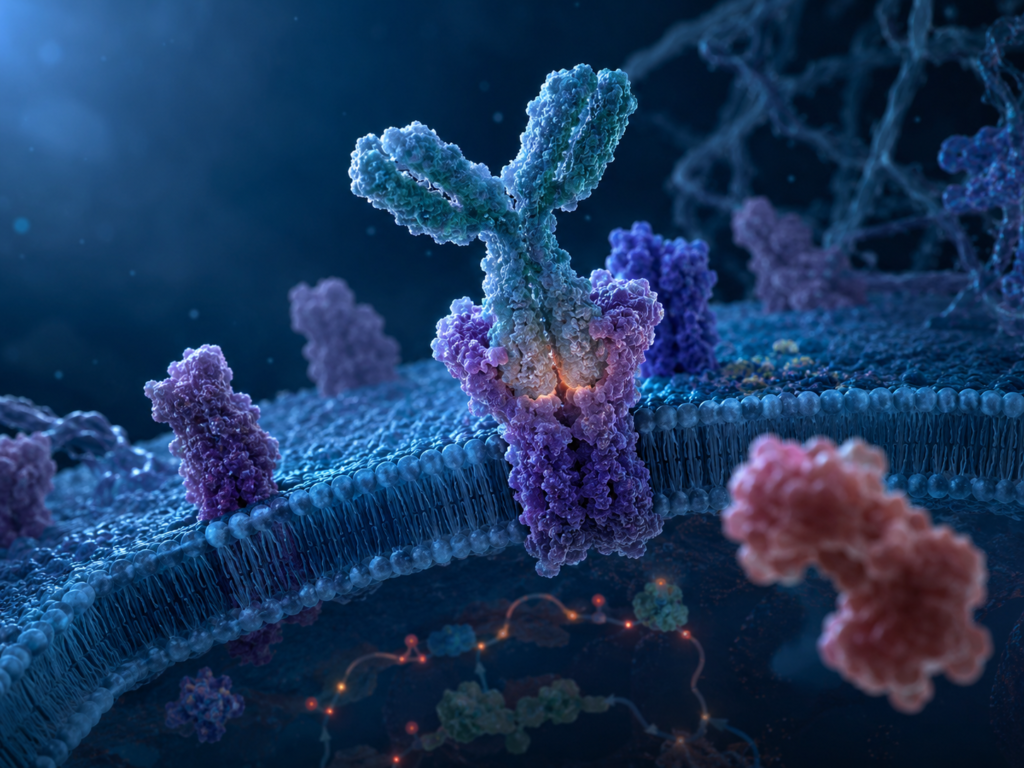
Pharmaceutical animation has become one of the most effective ways for pharmaceutical companies to explain complex therapies, educate healthcare professionals, support product launches, and communicate scientific discoveries. By combining molecular biology with cinematic 3D visualization, pharmaceutical animation transforms difficult scientific concepts into engaging visual stories that improve understanding across research, clinical, regulatory, and commercial audiences.
Scientific publications and clinical data are essential for researchers, but they are rarely the most effective way to communicate complex biological processes to physicians, healthcare professionals, investors, patients, or commercial teams.
This is where 3D medical animation has become one of the pharmaceutical industry’s most valuable communication tools.
Instead of relying solely on text, static illustrations, or technical presentations, pharmaceutical companies use scientifically accurate animations to visualize molecular interactions, cellular pathways, disease mechanisms, and therapeutic effects. By making invisible biological processes visible, these animations improve understanding, strengthen engagement, and help diverse audiences retain complex information.
Whether introducing a first-in-class therapy, educating healthcare professionals, supporting clinical trials, or preparing investor presentations, pharmaceutical animation transforms difficult scientific concepts into compelling visual stories that are easier to understand and remember.
In this guide, you’ll learn:
- Why pharmaceutical companies invest in 3D medical animation
- How animation simplifies complex therapies
- Where animations are used throughout the drug development lifecycle
- The benefits for medical affairs, marketing, sales, and education
- Best practices for creating scientifically accurate animations
- How to choose the right medical animation partner
Why Scientific Communication Has Become More Complex
Today’s therapies are fundamentally different from those introduced only a decade ago.
Many modern medicines target specific receptors, proteins, enzymes, or genetic pathways rather than treating symptoms alone. Understanding these mechanisms often requires knowledge of molecular biology, immunology, pharmacology, and cellular signaling.
Communicating these concepts through traditional formats can be difficult because biological interactions occur at microscopic scales that cannot be observed directly.
For example, explaining how a monoclonal antibody blocks a receptor or how a gene therapy delivers genetic material into a cell requires audiences to imagine biological processes they have never seen.
This communication gap affects multiple stakeholders, including:
- Physicians
- Researchers
- Medical affairs teams
- Clinical investigators
- Regulatory reviewers
- Commercial teams
- Investors
- Patients
Each audience requires a different level of scientific detail, making it even more challenging to communicate consistently.
Professionally produced medical animation bridges these gaps by translating complex science into visual stories that remain scientifically accurate while being easier to understand.
What Is 3D Medical Animation?
3D medical animation is the process of using computer-generated visualization to explain anatomy, physiology, disease progression, surgical procedures, medical devices, and pharmaceutical mechanisms in a realistic and engaging way.
Unlike traditional illustrations, animation adds movement, depth, timing, and context. Viewers can observe biological interactions as they occur, making complicated scientific concepts easier to follow.
Applications include:
- Mechanism of Action (MoA) animations
- Mechanism of Disease (MoD) animations
- Surgical procedure animations
- Medical device demonstrations
- Drug delivery visualization
- Patient education
- Clinical trial communication
- Physician training
- Investor presentations
- Scientific conference presentations
For pharmaceutical organizations, these visual assets become valuable resources throughout the entire product lifecycle.
If you’re new to MoA animations, read our complete guide:
👉 What Is Mechanism of Action (MoA) Animation?
Why Pharmaceutical Companies Invest in Medical Animation
Developing a new therapy requires years of scientific research and substantial investment.
Once a therapy reaches clinical development or commercialization, organizations must explain its value clearly to multiple audiences.
Medical animation makes this possible.
Instead of presenting lengthy scientific documents or complex pathway diagrams, organizations can communicate sophisticated biological processes within minutes using visual storytelling.
This improves comprehension while maintaining scientific credibility.
Some of the most common reasons pharmaceutical companies invest in animation include:
Explaining Novel Therapies
Many modern therapies involve biological mechanisms unfamiliar to healthcare professionals outside specific specialties.
Animation allows viewers to observe receptor binding, immune responses, protein interactions, cellular signaling, and therapeutic effects in ways that written descriptions cannot achieve.
Supporting Medical Affairs
Medical Affairs teams frequently communicate highly technical scientific information to healthcare professionals.
Professionally produced animations help standardize communication while making presentations more engaging and easier to understand.
These assets are commonly used during:
- Advisory board meetings
- Medical congresses
- Scientific symposia
- Continuing Medical Education (CME)
- Product training
Improving Commercial Communication
Marketing teams must communicate therapeutic differentiation without oversimplifying the underlying science.
Animation helps explain:
- Clinical advantages
- Drug mechanisms
- Competitive differentiation
- Treatment pathways
- Biological targets
This improves product positioning while maintaining scientific integrity.
Strengthening Investor Presentations
Investors may not have backgrounds in molecular biology or pharmacology.
Animation enables companies to explain:
- How a therapy works
- Why it is different
- Its commercial potential
- Its scientific innovation
This improves confidence while making presentations more memorable.
How Pharmaceutical Animation Simplifies Complex Therapies
One of the greatest challenges in modern medicine is communicating therapies that operate at the molecular and cellular levels. Healthcare professionals, investors, and patients often need to understand biological processes that cannot be observed directly.
Pharmaceutical animation solves this challenge by transforming invisible biological interactions into realistic three-dimensional visualizations.
Instead of relying on static pathway diagrams or lengthy scientific explanations, viewers can watch therapies interact with receptors, enzymes, proteins, immune cells, and tissues in real time.
This visual approach improves understanding while preserving scientific accuracy.
Making the Invisible Visible
Many pharmaceutical products work through microscopic interactions.
Examples include:
- receptor binding
- enzyme inhibition
- protein signaling
- antibody interactions
- immune modulation
- gene expression
- cellular uptake
- intracellular transport
Although these processes form the foundation of modern pharmacology, they cannot be demonstrated using traditional photography or live video.
Three-dimensional animation bridges this gap by reconstructing biological environments from scientific evidence and visualizing events that occur at the molecular level.
This makes pharmaceutical animation an invaluable communication tool throughout the drug development process.
Improving Understanding Across Multiple Audiences
Different audiences require different scientific depth.
A physician may want to understand receptor pharmacology.
A marketing team may need to communicate product differentiation.
An investor may simply want to understand why a therapy represents a significant innovation.
Rather than creating completely different educational materials for each audience, pharmaceutical companies often adapt one professionally produced animation into multiple formats.
These may include:
- physician presentations
- medical congress videos
- sales training materials
- investor presentations
- website explainers
- social media clips
- conference booth displays
- patient education resources
This flexibility significantly increases the long-term value of each animation project.
Applications Throughout the Pharmaceutical Product Lifecycle
High-quality pharmaceutical animation supports communication long before a therapy reaches the market.
Organizations increasingly integrate animation throughout the entire product lifecycle.
Drug Discovery and Early Research
During discovery, research teams use visualization to explain biological targets, disease pathways, and therapeutic hypotheses.
Animations can help multidisciplinary teams communicate complex mechanisms more effectively during internal meetings, collaborations, and funding presentations.
Preclinical Development
As candidate therapies progress toward clinical testing, animation helps explain:
- target validation
- biological pathways
- therapeutic rationale
- molecular interactions
- expected mechanisms
These visualizations improve collaboration among scientists, clinicians, and strategic partners.
Clinical Development
Clinical trials involve investigators, research coordinators, medical affairs teams, and participants who may have varying levels of scientific expertise.
Animation can simplify communication by illustrating:
- treatment mechanisms
- study objectives
- expected biological effects
- disease pathways
- patient education materials
This supports clearer communication while improving engagement.
Product Launches
Commercial launches often require educational materials that balance scientific accuracy with accessible storytelling.
Pharmaceutical animation supports:
- launch campaigns
- physician education
- congress presentations
- digital marketing
- sales enablement
- medical affairs activities
Rather than replacing scientific publications, animation complements them by making complex information easier to understand.
Pharmaceutical Animation for Different Therapy Types
Every therapy presents unique scientific communication challenges.
Animation strategies should be tailored accordingly.
Small Molecule Drugs
Animations typically focus on:
- receptor binding
- enzyme inhibition
- intracellular signaling
- molecular pathways
These projects often emphasize pharmacology at the molecular level.
Biologics
Biologic therapies involve considerably larger molecular structures.
Animations frequently visualize:
- monoclonal antibodies
- cytokines
- immune cells
- protein interactions
- receptor blockade
These therapies often benefit from detailed three-dimensional visualization because their mechanisms are difficult to explain using static graphics alone.
Gene and Cell Therapies
Advanced therapies introduce entirely different biological processes.
Animations may demonstrate:
- viral vectors
- genetic delivery
- stem cells
- CAR-T cells
- CRISPR technologies
- gene editing
Because these therapies remain unfamiliar to many audiences, visualization plays an essential educational role.
Vaccine Development
Vaccines involve dynamic immune responses that are difficult to communicate using traditional illustrations.
Animation can demonstrate:
- antigen recognition
- immune activation
- antibody production
- memory cell formation
- protective immune responses
These visual stories improve understanding among healthcare professionals and the public alike.
Why Pharmaceutical Companies Choose 3D Medical Animation Over Traditional Graphics
Static diagrams remain valuable scientific references, but they cannot fully communicate dynamic biological processes.
Three-dimensional animation offers several important advantages.
| Traditional Medical Illustration | Pharmaceutical Animation |
|---|---|
| Static images | Dynamic visualization |
| Limited movement | Realistic biological motion |
| Text-heavy explanations | Visual storytelling |
| Difficult to demonstrate timing | Shows biological sequences over time |
| Lower engagement | Higher audience engagement |
| Limited reuse | Easily adapted for multiple channels |
Professional pharmaceutical animation combines scientific rigor with cinematic storytelling, allowing organizations to communicate innovation more effectively while maintaining credibility.
Pharmaceutical Animation in Medical Affairs, Marketing, and Sales
Scientific innovation alone does not guarantee commercial success. Once a therapy progresses through development, pharmaceutical companies must communicate its value consistently to physicians, healthcare professionals, investors, commercial teams, and patients.
This is where pharmaceutical animation becomes a strategic communication asset rather than simply a marketing tool.
A professionally produced animation can support multiple departments across an organization, helping teams explain complex therapies with greater clarity while maintaining scientific accuracy.
Medical Affairs
Medical Affairs teams are responsible for communicating evidence-based scientific information to healthcare professionals and key opinion leaders (KOLs).
These discussions often involve sophisticated topics such as:
- Mechanism of Action (MoA)
- Disease biology
- Clinical trial outcomes
- Biomarker pathways
- Therapeutic differentiation
- Safety profiles
Instead of relying solely on slides filled with complex diagrams, Medical Affairs professionals can use pharmaceutical animation to visually explain the science behind a therapy.
Animations are commonly used during:
- Advisory board meetings
- Medical congresses
- Scientific symposia
- Continuing Medical Education (CME)
- Product training
- Investigator meetings
By presenting biological processes in an engaging visual format, Medical Affairs teams can improve scientific understanding while encouraging more meaningful discussions.
Internal Link: Learn how our Mechanism of Action (MoA) Animation Services help pharmaceutical companies communicate complex drug mechanisms with clarity.
Pharmaceutical Marketing
Modern pharmaceutical marketing requires a careful balance between scientific accuracy and compelling storytelling.
Healthcare professionals expect evidence-based communication, while marketing teams need engaging content that differentiates products in competitive markets.
Pharmaceutical animation helps bridge this gap.
Rather than overwhelming audiences with technical terminology, animation transforms scientific evidence into memorable visual experiences.
Common marketing applications include:
- Product launch campaigns
- Website content
- Conference presentations
- Digital advertising
- Product microsites
- Social media campaigns
- Medical congress booths
- Email marketing
- Brand awareness initiatives
Because animation combines science with storytelling, it often generates higher engagement than static graphics or text-heavy presentations.
Sales Enablement
Sales representatives frequently have limited time to communicate complex therapies during meetings with healthcare professionals.
A concise pharmaceutical animation can explain a therapy’s biological mechanism far more efficiently than several presentation slides.
Sales teams often use animation to:
- Introduce new therapies
- Explain product differentiation
- Demonstrate clinical advantages
- Support scientific discussions
- Reinforce key messaging
Consistent visual communication also helps ensure that scientific messaging remains aligned across different markets and sales teams.
Investor Relations
Scientific innovation attracts investment, but investors often come from financial or business backgrounds rather than life sciences.
Explaining a novel therapy through traditional scientific literature can be challenging.
Pharmaceutical animation allows organizations to demonstrate:
- How a therapy works
- What problem it solves
- Why the technology is unique
- Its competitive advantages
- Potential market impact
A clear visual explanation can improve investor understanding while making presentations more engaging and memorable.
How Pharmaceutical Animation Supports Different Healthcare Industries
Although pharmaceutical companies are among the largest users of medical animation, many other healthcare sectors benefit from the same communication approach.
Biotechnology Companies
Biotechnology organizations frequently develop therapies involving:
- Gene editing
- Cell therapy
- Precision medicine
- RNA therapeutics
- Protein engineering
- Immunotherapy
These technologies often require sophisticated scientific communication because the underlying biology is unfamiliar to many audiences.
Three-dimensional pharmaceutical animation helps explain these innovations clearly while maintaining scientific credibility.
Medical Device Companies
Medical device manufacturers often need to demonstrate both engineering functionality and clinical benefits.
Animations can illustrate:
- Device deployment
- Surgical workflows
- Implant positioning
- Blood flow
- Tissue interaction
- Clinical outcomes
These visualizations help physicians understand how devices function inside the body.
Internal Link: Discover our Medical Device Animation Services
Healthcare Organizations
Hospitals, healthcare systems, and academic medical centers increasingly use animation to improve communication with patients, students, and healthcare professionals.
Applications include:
- Patient education
- Medical training
- Clinical procedures
- Disease awareness
- Surgical education
- Continuing education
By simplifying difficult medical concepts, animation improves both understanding and engagement.
Why Scientific Storytelling Matters
Facts alone rarely inspire action.
People remember stories far more effectively than isolated pieces of information.
Scientific storytelling combines evidence, visualization, and narrative structure to create memorable educational experiences.
Instead of presenting disconnected scientific facts, pharmaceutical animation explains:
- The disease
- The biological problem
- The therapeutic intervention
- The clinical outcome
This narrative structure helps audiences understand not only what happens but also why it matters.
Effective storytelling can significantly improve:
- Knowledge retention
- Audience engagement
- Scientific understanding
- Presentation effectiveness
- Brand perception
Measuring the Return on Investment (ROI) of Pharmaceutical Animation
A professionally produced pharmaceutical animation is more than a creative asset—it is a long-term investment that can deliver value across multiple departments and communication channels.
Organizations often evaluate return on investment using both qualitative and quantitative measures.
Common performance indicators include:
- Increased audience engagement
- Higher video completion rates
- Improved comprehension
- More effective physician education
- Better investor presentations
- Stronger sales enablement
- Increased website conversions
- Greater conference engagement
- Improved internal training outcomes
Unlike many marketing assets that are used once, pharmaceutical animations can be repurposed for websites, congresses, sales presentations, social media, webinars, medical education, and internal communication, maximizing their long-term value.
Why Choose a Specialized Medical Animation Studio?
Creating scientifically accurate pharmaceutical animation requires expertise that extends beyond traditional animation or graphic design.
An experienced medical animation studio combines scientific knowledge with advanced visual storytelling to produce content that is both engaging and evidence-based.
When evaluating potential partners, consider the following factors.
| Evaluation Criteria | Why It Matters |
|---|---|
| Scientific expertise | Ensures biological accuracy |
| Medical writers | Translate complex science into clear narratives |
| 3D artists | Create realistic biological environments |
| Structured production process | Improves efficiency and collaboration |
| Quality assurance | Reduces scientific and regulatory risks |
| Relevant portfolio | Demonstrates experience with similar therapies |
Choosing the right partner can significantly influence the effectiveness of your scientific communication strategy.
Internal Link: Learn more about Life Render’s Production Process
Related Resources
If you’re exploring scientific visualization for your next project, these resources may also be helpful:
- What Is Mechanism of Action (MoA) Animation?
https://www.liferender.com/what-is-mechanism-of-action-animation/ - Mechanism of Disease (MoD) Animation Services
https://www.liferender.com/mechanism-of-disease-mod-animation/ - Medical Device Animation Services
https://www.liferender.com/medical-device-animation - 3D Medical Animation Project Starter Guide
https://www.liferender.com/3d-medical-animation-project-starter-guide/
Best Practices for Creating Effective Pharmaceutical Animation
Not all pharmaceutical animations deliver the same results. The most effective projects combine scientific accuracy, strategic storytelling, and high-quality visual production to communicate complex therapies with clarity and confidence.
Whether the goal is physician education, investor communication, or product marketing, following proven best practices ensures that animations remain engaging, scientifically credible, and aligned with business objectives.
Start with Clear Communication Objectives
Every pharmaceutical animation should begin with a well-defined purpose.
Ask questions such as:
- Who is the target audience?
- What scientific concepts need to be explained?
- What action should viewers take after watching?
- What level of scientific detail is appropriate?
- Where will the animation be used?
The answers influence everything from scriptwriting to visual style and narration.
For example, an animation developed for medical affairs may include highly detailed molecular interactions, while one designed for investors focuses on the therapy’s value proposition and market opportunity.
Build Every Animation on Scientific Evidence
Scientific accuracy should always be the foundation of pharmaceutical animation.
Reliable projects are based on:
- Peer-reviewed publications
- Clinical research
- Scientific literature
- Regulatory documentation
- Medical expert review
- Structural biology data
- High-quality reference material
Animations should accurately represent biological processes without exaggerating therapeutic outcomes or making unsupported claims.
Organizations such as the U.S. Food and Drug Administration (FDA) and the National Institutes of Health (NIH) provide valuable scientific resources that help guide evidence-based communication.
External references:
Balance Scientific Accuracy with Visual Clarity
One of the biggest challenges in pharmaceutical animation is deciding how much scientific detail to include.
Showing every molecular interaction exactly as it occurs may overwhelm the audience.
Oversimplifying the science, however, can reduce credibility.
Successful animations strike a careful balance by:
- Highlighting the most important biological events
- Removing unnecessary visual complexity
- Using clear labels and annotations
- Applying cinematic techniques to guide viewer attention
- Maintaining consistency throughout the narrative
The objective is not simply to create beautiful visuals, but to improve understanding.
Design for Multiple Platforms
A single pharmaceutical animation can often be adapted for multiple communication channels.
Common formats include:
- Website landing pages
- Medical congress presentations
- Investor meetings
- Sales presentations
- Healthcare professional education
- Internal training
- Social media campaigns
- Conference displays
- Digital advertising
Planning for multiple outputs during production increases the long-term value of the project while reducing future production costs.
The Life Render Approach to Pharmaceutical Animation
At Life Render, we believe great pharmaceutical animation begins with understanding the science behind every therapy.
Our multidisciplinary production process combines scientific research, medical storytelling, and cinematic 3D visualization to transform complex biological mechanisms into clear, engaging visual experiences.
Every project is tailored to the client’s objectives, audience, and communication goals while maintaining a strong commitment to scientific accuracy.
Our services support organizations across the pharmaceutical, biotechnology, medical device, and healthcare industries.
Explore our core services:
- Mechanism of Action (MoA) Animation
https://www.liferender.com/mechanism-of-action-moa-animation/ - Mechanism of Disease (MoD) Animation
https://www.liferender.com/mechanism-of-disease-mod-animation/ - Medical Device Animation
https://www.liferender.com/medical-device-animation - Surgical Animation
https://www.liferender.com/surgical-animation - View All Services
https://www.liferender.com/services/
If you’d like to see examples of our work, visit our Portfolio:
Frequently Asked Questions
What is pharmaceutical animation?
Pharmaceutical animation is the use of scientifically accurate 2D or 3D animation to explain how drugs, biologics, and advanced therapies work. These animations help pharmaceutical companies communicate complex scientific concepts to healthcare professionals, researchers, investors, and patients.
How does pharmaceutical animation differ from medical animation?
Medical animation is a broad category that includes anatomy, surgical procedures, disease mechanisms, medical devices, and pharmaceutical content.
Pharmaceutical animation specifically focuses on drug development, mechanisms of action, therapeutic pathways, clinical research, and scientific communication within the pharmaceutical industry.
Why do pharmaceutical companies use 3D animation?
Three-dimensional animation helps explain biological processes that cannot be observed directly.
It improves scientific communication by making complex molecular interactions easier to understand, increasing audience engagement and knowledge retention across multiple stakeholder groups.
How long does it take to produce a pharmaceutical animation?
Production timelines vary depending on the scientific complexity, animation length, and review process.
Most professional pharmaceutical animation projects are completed over several weeks to several months, with additional time allocated for scientific validation and client feedback.
To understand the complete workflow, visit our Production Process:
How much does pharmaceutical animation cost?
Costs depend on factors such as animation length, scientific complexity, custom asset creation, level of detail, voice-over requirements, and revisions.
For more information, explore our Pricing page:
Can pharmaceutical animation support regulatory communication?
Yes. Pharmaceutical animation can support regulatory communication, advisory committee presentations, medical education, and internal scientific training. However, all content should undergo appropriate scientific, medical, and regulatory review before use.
Conclusion
As therapies become more advanced, the need for clear, engaging, and scientifically accurate communication continues to grow.
Pharmaceutical animation enables organizations to transform complex biological processes into compelling visual stories that educate healthcare professionals, strengthen investor presentations, improve medical training, and support commercial success.
Whether explaining a novel mechanism of action, introducing an innovative biologic, demonstrating a medical device, or supporting clinical education, high-quality 3D medical animation makes invisible science understandable.
By combining scientific expertise with cinematic storytelling, pharmaceutical companies can communicate with greater clarity, improve audience engagement, and maximize the impact of their innovations throughout the product lifecycle.
If your organization is planning a pharmaceutical animation project, our team at Life Render can help transform your scientific concepts into visually compelling, scientifically accurate animations.
👉 Request a Quote:
https://www.liferender.com/request-a-quote/
👉 Contact Us:
https://www.liferender.com/contact/
Related Articles
Continue exploring our medical animation resources:
- What Is Mechanism of Action (MoA) Animation?
https://www.liferender.com/what-is-mechanism-of-action-animation/ - 3D Medical Animation Project Starter Guide
https://www.liferender.com/3d-medical-animation-project-starter-guide/ - Our Complete Portfolio
https://www.liferender.com/portfolio/ - Medical Animation Services
https://www.liferender.com/services/